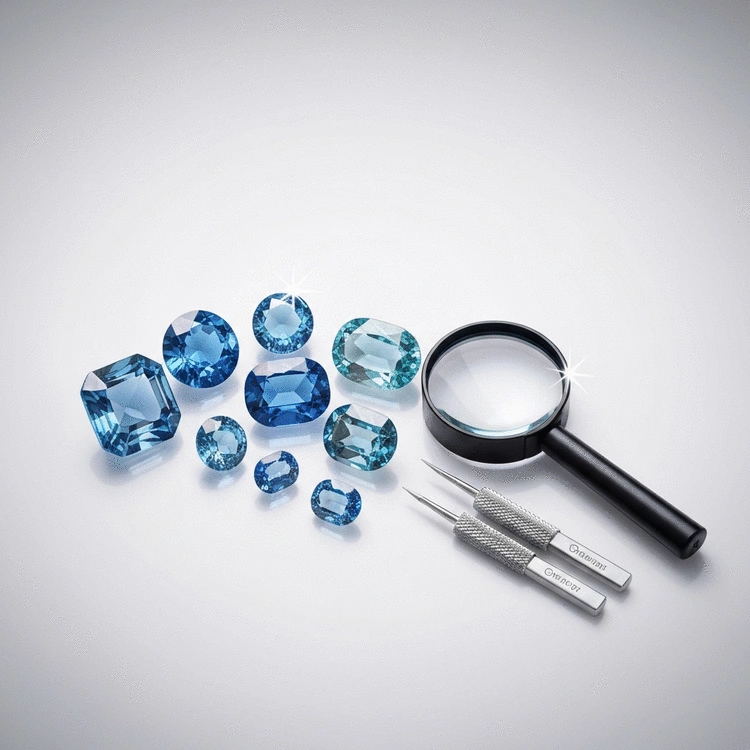

Have you ever wondered what truly elevates a blue gemstone from ordinary to extraordinary? Understanding quality assessment is key to making informed choices. Here’s what you need to know!
What You Will Learn
- Understand the Four Cs: Color, cut, clarity, and carat weight are essential for evaluating blue gemstones.
- Evaluate Color Factors: Look for vivid hue, appropriate tone, and high saturation to determine a gemstone’s value.
- Importance of Cut: A well-executed cut enhances brilliance and overall appearance, impacting value significantly.
- Assess Clarity: Fewer inclusions and blemishes result in higher clarity and desirability in gemstones.
- Consider Carat Weight: Larger gemstones are often rarer and more expensive, but size isn’t everything; quality matters too.
- Know Durability Factors: Use the Mohs Hardness Scale to ensure your gemstones can withstand everyday wear.
- Verify Certification: Always look for certification from reputable organizations like GIA or IGI to ensure authenticity.
- Research Ethical Sourcing: Prioritize vendors who support responsible sourcing and fair trade practices.
Key Aspects of Blue Gemstone Quality
Understanding the core elements of blue gemstone quality helps in making informed decisions. Below is a detailed breakdown of the "Four Cs" and durability factors.
The Four Cs: Color Assessment
- Hue: Actual color (royal blue, sky blue)
- Tone: Lightness/darkness (light to dark)
- Saturation: Intensity (vivid colors more valuable)
The Four Cs: Cut Evaluation
- Brilliant Cut: Maximizes sparkle
- Step Cut: Focuses on clarity/color
- Fancy Cuts: Unique shapes
The Four Cs: Clarity Insights
- Inclusions: Internal flaws (bubbles, mineral deposits)
- Blemishes: External imperfections (scratches, chips)
The Four Cs: Carat Weight
- Size: Bigger gemstones typically higher cost
- Rarity: Some stones more valuable per carat
Durability: Mohs Hardness Scale
- Sapphire: 9 (Extremely durable)
- Blue Topaz: 8 (Great for everyday)
- Aquamarine: 7.5-8 (Balance of beauty & durability)
Durability: Toughness & Stability
- Stable Gems: (e.g., Sapphire) Endure daily wear
- Less Stable Gems: (e.g., some Turquoise) More vulnerable
Understanding Quality Assessment for Blue Gemstones
When it comes to appreciating the beauty of blue gemstones, understanding quality assessment is crucial. At Blue Jewelry Stones, we believe that knowing what to look for can truly elevate your gemstone experience. In this section, we’ll dive into the essentials of quality assessment, including the renowned Four Cs, durability factors, and specific characteristics of popular blue gems. Let’s get started!
What Are the Four Cs of Blue Gemstones?
The Four Cs—color, cut, clarity, and carat weight—are the cornerstone of gemstone quality. Each aspect plays a vital role in determining the overall value of a blue gemstone. So, what do these Cs really mean for you?
- Color: The most impactful feature, including hue, tone, and saturation.
- Cut: How the gem is shaped and faceted, affecting its brilliance.
- Clarity: The presence of inclusions or blemishes that may hinder its beauty.
- Carat Weight: The size of the gemstone, which influences its overall worth.
Understanding these four crucial elements will empower you to make informed decisions when selecting your blue gemstones. Let’s break them down further!
Breaking Down Color: Hue, Tone, and Saturation
Color is perhaps the most captivating factor of a gemstone. It’s not just about the shade of blue; it’s about how that color interacts with light!
- Hue: This refers to the actual color of the gemstone, such as royal blue or sky blue.
- Tone: The lightness or darkness of the color, ranging from light to dark.
- Saturation: It indicates the intensity of the color—vivid colors tend to be more valuable.
When you choose a gemstone, look for a vivid hue that excites you. This is what makes your blue gemstone truly stand out!
Evaluating Cut: Importance of Shape and Faceting
The cut of a gemstone significantly impacts its overall appearance. A well-cut stone will reflect light beautifully, enhancing its brilliance. Various shapes, from classic round to unique pear, can change the way a stone looks.
- Brilliant Cut: Maximizes sparkle with multiple facets.
- Step Cut: Focuses on clarity and color, creating a sleek appearance.
- Fancy Cuts: Unique shapes that can add character to your gemstone.
Remember, a great cut not only enhances beauty but also increases the value of your gemstone. So, choose wisely!
Clarity Insights: Identifying Inclusions and Blemishes
Clarity is all about imperfections. Inclusions and blemishes can impact a gemstone's sparkle, making clarity a vital aspect of its quality assessment.
- Inclusions: Internal flaws, such as air bubbles or mineral deposits.
- Blemishes: External imperfections, like scratches or chips.
For blue gemstones, a higher clarity grade means a more desirable and valuable stone. Always inspect your gemstone closely to ensure it meets your standards.
Carat Weight: Understanding Size vs. Value
Carat weight is often associated with size, but it’s not the only factor influencing value. Larger stones can be rarer, leading to higher prices.
- Size: Bigger gemstones typically draw attention but also come with a higher cost.
- Rarity: Some stones are more valuable per carat due to their limited availability.
When assessing value, consider both size and the unique factors that contribute to a gemstone’s allure. Your perfect blue gemstone is waiting to shine!
Durability Factors: Assessing the Long-Term Viability of Blue Gemstones
Durability is essential for choosing a gemstone, especially if you plan to wear it frequently. The long-term viability of blue gemstones can be evaluated based on their hardness and toughness.
- Mohs Hardness Scale: This scale ranks gemstones based on their ability to resist scratching.
- Toughness: Describes how well a gemstone can withstand impacts and pressure.
Understanding these factors ensures that your blue gemstones will maintain their beauty for years to come. Choose wisely for a lifetime of enjoyment!
Utilizing the Mohs Hardness Scale for Everyday Wear
The Mohs Hardness Scale ranges from 1 (talc) to 10 (diamond). Most blue gemstones fall between 5 and 9, making them suitable for everyday wear!
- Sapphire: 9 - Extremely durable and resistant to scratches.
- Blue Topaz: 8 - Great for everyday jewelry.
- Aquamarine: 7.5-8 - Offers a nice balance of beauty and durability.
Keep this scale in mind to ensure your blue gemstones can withstand the test of time!
Understanding Toughness and Stability for Daily Use
The toughness of a gemstone is equally important. It refers to how well a stone resists breaking or chipping. For daily wear, you want a gemstone that can handle the occasional bump!
- Stable Gems: Like sapphire, can endure daily wear and tear.
- Less Stable Gems: Some varieties of turquoise may be more vulnerable to damage.
Choosing a tough gemstone means you can enjoy its beauty without worry. After all, your jewelry should fit seamlessly into your active lifestyle!
Gemstone-Specific Characteristics and Their Impact on Quality
Each blue gemstone has its unique properties that affect quality and value. Navigating these nuances will enhance your understanding and appreciation of these stunning stones. For example, knowing the specific characteristics of different blue gemstones, as detailed by GemSelect, can significantly aid in your selection process.
Blue Sapphire: Quality and Investment Considerations
Blue sapphires are renowned for their deep, vivid hues. Their quality is primarily determined by color, clarity, and origin. If you're considering an investment, look for intensely colored stones with high clarity. The GIA provides comprehensive information on sapphire quality factors, which can guide your decision-making.
Aquamarine: Evaluating Clarity and Color
Aquamarine's light blue tones can be mesmerizing. When selecting one, focus on clarity and the depth of its blue hue. A well-cut aquamarine should sparkle with clarity.
Blue Topaz: Color Treatments and Authenticity
Blue topaz is often treated to enhance its color. Ensure you inquire about any treatments to understand the stone's value fully. Authentic stones will have rich color saturation without fading!
Turquoise: Natural vs. Treated Stones
Turquoise can vary greatly in quality. Natural stones are rare and highly sought after, while treated stones can be more accessible. Always check for authenticity when purchasing!
Exploring Blue Diamonds: Rarity and Value Insights
Blue diamonds are exceptionally rare and carry a significant price tag. Their color is influenced by boron, making them unique. If you're considering one, be prepared for an investment!
Understanding Tanzanite and Its Unique Quality Factors
Tanzanite is a stunning gemstone known for its unique blue and violet hues. Factors such as color saturation and clarity will determine its value, making it an exciting choice for collectors.
Ensuring Authenticity: Certification and Testing Methods
As you navigate the world of blue gemstones, ensuring authenticity is key. Certified stones provide peace of mind during your purchase.
The Role of GIA, IGI, and AIGS in Certification
Reputable gemological institutes like the GIA, IGI, and AIGS offer certification services to authenticate gemstones. Their reports include details on the Four Cs and assure buyers of quality.
How to Conduct Basic Gemstone Testing at Home
You can perform some basic tests at home to check your gemstone's authenticity. Simple methods include checking for scratches and observing how the stone refracts light!
Understanding Gemstone Grading and Appraisal Processes
Gemstone grading and appraisal can seem complex, but understanding the basics can help you make informed choices. Familiarize yourself with grading scales to better assess quality.
Visual Indicators of Quality: What to Look For
While tools can help, many visual indicators can inform your assessment of blue gemstones. Learning to recognize these can aid you in identifying high-quality stones.
Recognizing High-Quality Color and Clarity Without Tools
Look for rich hues and minimal inclusions when evaluating color and clarity. High-quality gemstones will have a depth that captures your eye!
Utilizing Visual Comparisons: Side-by-Side Examples
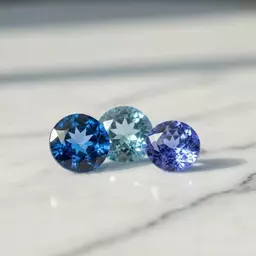
When shopping, compare stones side by side. This visual approach allows you to see differences in color and clarity, making it easier to make a choice that resonates with you!
Optical Properties and Their Impact on Perceived Value
Familiarize yourself with optical properties like brilliance and fire. These factors can greatly enhance the perceived value of your blue gemstones.
Frequently Asked Questions (FAQs)
Here are some common questions about blue gemstone quality:
- 1. What are the "Four Cs" of blue gemstones?
- The "Four Cs" stand for Color, Cut, Clarity, and Carat Weight. These are the primary factors used to assess the quality and value of any gemstone, including blue gemstones.
- 2. Why is color so important for blue gemstones?
- Color is often the most captivating feature. It's evaluated based on hue (the actual color, e.g., royal blue), tone (lightness or darkness), and saturation (intensity or vividness). Vivid, well-saturated colors are generally more valuable.
- 3. How does the cut affect a blue gemstone's appearance?
- The cut influences how a gemstone reflects light and sparkles. A well-executed cut maximizes brilliance and can significantly enhance the stone's overall appearance and value. Different cuts, like brilliant or step cuts, emphasize different characteristics.
- 4. What is the Mohs Hardness Scale, and why is it relevant?
- The Mohs Hardness Scale measures a gemstone's resistance to scratching. It's crucial for understanding a blue gemstone's durability for everyday wear. For example, sapphire scores a 9, making it very durable, while aquamarine scores 7.5-8.
- 5. Why is certification important when buying blue gemstones?
- Certification from reputable gemological institutes like GIA or IGI ensures the authenticity and verifies the quality of a gemstone. It provides an unbiased report on the stone's characteristics, offering peace of mind to buyers.
Maintenance Tips for Preserving Blue Gemstone Quality
Once you acquire your stunning blue gemstones, maintaining their quality is key. Here are some practical tips to keep your gems looking their best.
Cleaning and Care Recommendations for Longevity
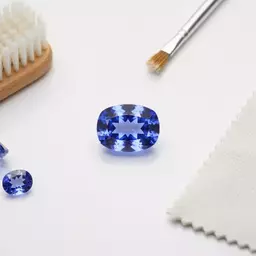
- Gentle Cleaning: Use warm soapy water and a soft brush for cleaning.
- Avoid Harsh Chemicals: Stay away from bleach or abrasive cleaners that can damage the stone.
- Proper Storage: Store each piece separately to avoid scratches.
Adopting these cleaning practices can help your blue gemstones shine brightly for years to come!
Recognizing Signs of Degradation Over Time
Keep an eye out for signs of wear, such as scratches or dullness. If you notice your gemstone losing its luster, it may require professional cleaning or even recutting!
Price vs. Quality: Understanding the Economics of Blue Gemstones
As you navigate the world of blue gemstones, understanding the balance between price and quality is essential. Recognizing how various factors influence value can guide your purchasing decisions.
Budget Tiers: How to Choose Based on Quality and Price
- Entry-Level: Look for affordable options with good quality.
- Mid-Range: Consider stones with better clarity and color.
- High-End: Invest in rare, high-quality gems for your collection.
Choosing wisely within your budget can help you find the perfect blue gemstone that reflects your personal style.
Investment-Grade vs. Commercial-Grade: What to Know
Investment-grade gemstones are exceptional in quality and rarity. Commercial-grade stones are more accessible but may not hold value as well. Understanding these distinctions can help you invest wisely!
The Impact of Rarity on Market Value and Price per Carat
Rarity plays a significant role in determining a gemstone's market value. The more rare the stone, the higher the price per carat. This fact can be especially important when considering an investment!
Pro Tip
When selecting your blue gemstone, consider not just its immediate aesthetic appeal, but also its potential for appreciation in value. Look for stones that are rare, have high clarity, and come with a reputable certification, as these factors significantly enhance their investment potential. Additionally, be mindful of the gemstone’s origin, as ethically sourced stones often carry a story that adds to their allure!
Making Informed Decisions: Your Path to Quality Blue Gemstones
When it comes to purchasing blue gemstones, knowledge is your best friend! Understanding the quality and characteristics of these stunning stones can empower you to make informed decisions. Let’s explore the essential aspects you should consider to ensure you’re investing in the right piece.
Key Takeaways for Assessing Blue Gemstone Quality
- Know the Four Cs: Always assess color, cut, clarity, and carat weight to gauge quality.
- Look for Certification: Ensure your gemstone is certified by reputable organizations like GIA or IGI.
- Consider Durability: Check the stone’s hardness and toughness for everyday wear.
- Research Ethical Sources: Prioritize vendors who practice responsible sourcing.
These key points will help you identify high-quality gemstones, making the selection process much smoother. Remember, taking the time to educate yourself is invaluable when investing in a piece that’s meant to last!
Understanding Ethical Sourcing and Its Importance in Gemstone Purchases
Ethical sourcing is crucial in today’s jewelry market. It ensures that the gemstones you purchase are mined and traded responsibly, without exploiting communities or harming the environment. At Blue Jewelry Stones, we are committed to promoting ethical practices, and we encourage our customers to consider the source of their gemstones.
- Inquire about the origin of your gemstone.
- Look for vendors who support fair trade practices.
- Seek transparency about mining conditions and labor ethics.
By prioritizing ethical sourcing, you not only contribute to sustainable practices but also ensure your gemstones carry a story of integrity and respect!
Encouraging Smart Purchases: Trustworthy Sources and Vendors
Finding a reputable source for blue gemstones can sometimes feel overwhelming, but it doesn’t have to be! It’s essential to choose vendors that prioritize quality and authenticity. Here are some tips for identifying trustworthy sources:
- Check for certifications and memberships in professional organizations.
- Read customer reviews and testimonials for firsthand experiences.
- Engage with vendors who are knowledgeable about their products.
- Ask about return policies and guarantees to protect your purchase.
By following these guidelines, you can feel confident in your purchases, knowing you are supported by credible sources that share your passion for blue gemstones!
Your Next Steps: How to Start Evaluating Blue Gemstones Today
Now that you’re equipped with essential knowledge about assessing blue gemstones, it’s time to take action! Start by visiting our curated collection at Blue Jewelry Stones to see a variety of quality blue gemstones. Here’s a simple checklist to guide you:
- Research different types of blue gemstones and their unique qualities.
- Visit trusted vendors and ask questions about certification and sourcing.
- Compare gemstones side by side to evaluate color and clarity.
- Take note of your budget and prioritize quality over quantity.
Embarking on this journey is as exciting as it is rewarding. Let your passion for blue gemstones guide you in finding a piece that resonates with your personal style and values. Happy gemstone hunting!
Recap of Key Points
Here is a quick recap of the important points discussed in the article:
- Know the Four Cs: Always assess color, cut, clarity, and carat weight to gauge quality.
- Look for Certification: Ensure your gemstone is certified by reputable organizations like GIA or IGI.
- Consider Durability: Check the stone’s hardness and toughness for everyday wear.
- Research Ethical Sources: Prioritize vendors who practice responsible sourcing.
- Maintain Your Gems: Follow proper care and cleaning practices to preserve their beauty.